Loose Tube Longitudinal Stripper K-LS1
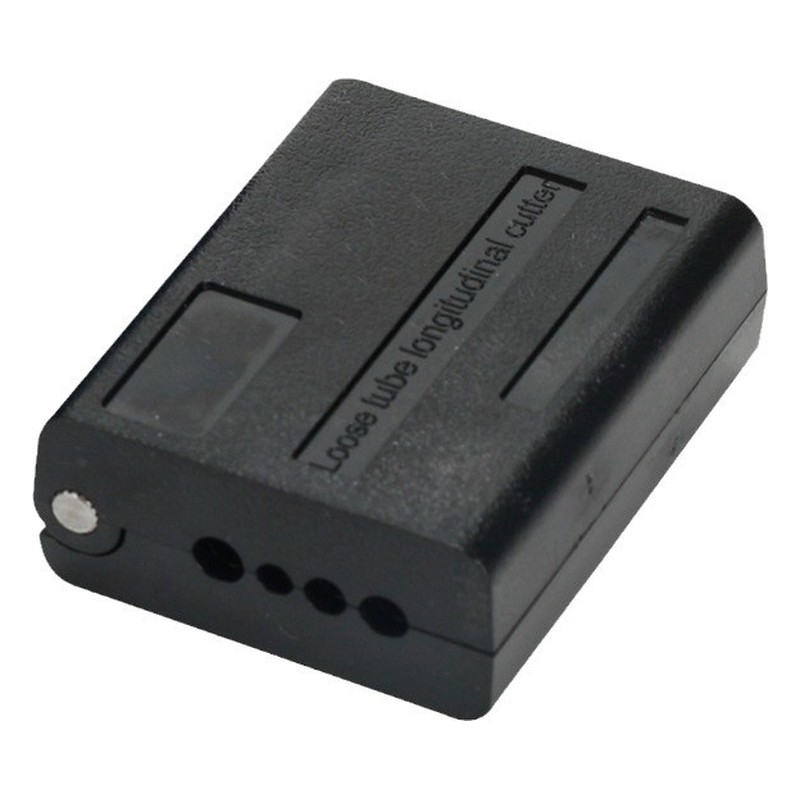
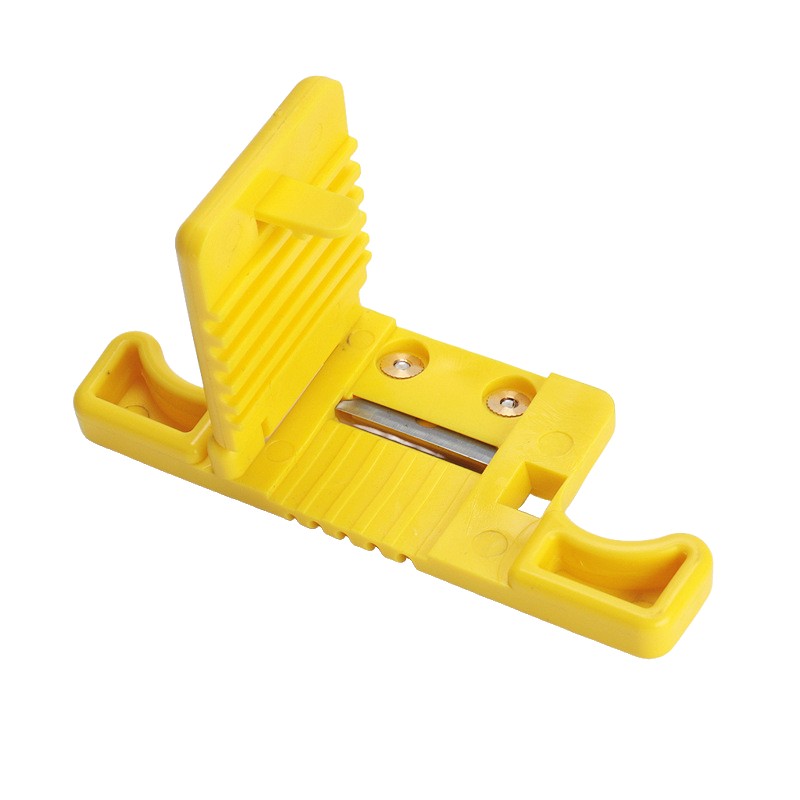
A solid box that swallows the tube and slits it into two halves: feed the loose tube through the hole that matches it — 1.5–1.9, 2.0–2.4, 2.5–2.9 or 3.0–3.3 mm — close the hinged lid, and draw the box along. The alloy blade inside splits the tube wall lengthwise, ready to peel away from the fibers.
Typical work: Longitudinal opening of loose buffer tubes; Outdoor cable cutover; Tube preparation at cable ends; FTTx installation and maintenance.
Get a Quote WhatsApp UsNeutral stock in small lots, or private label made to your requirements. Prices on request — EXW factory pricing.
K-LS1 key features
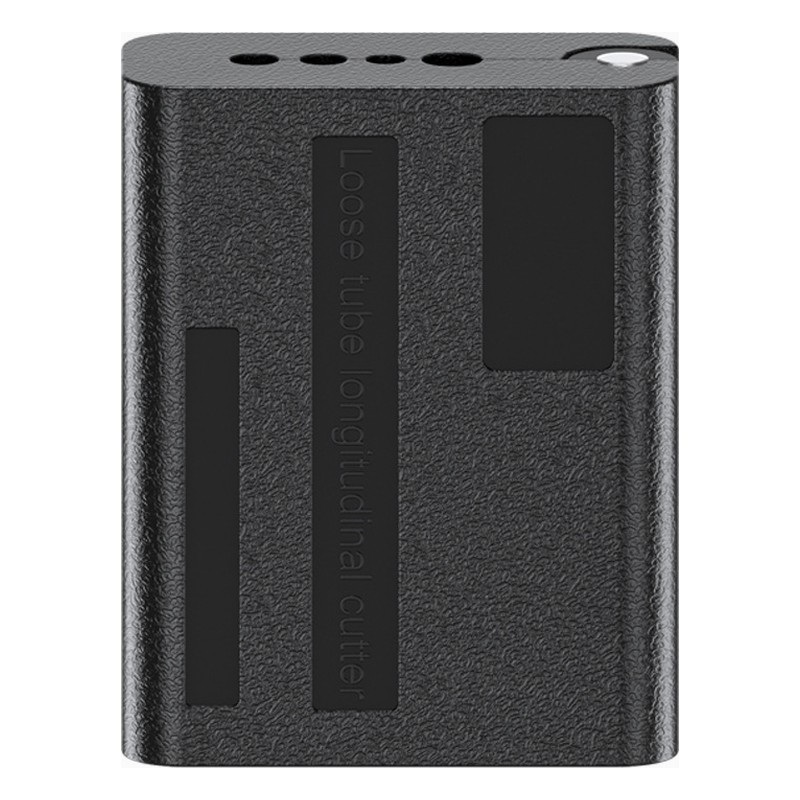
- Four holes through the edge, one for each standard loose tube: 1.5–1.9, 2.0–2.4, 2.5–2.9 and 3.0–3.3 mm — the tube itself passes through the box, so it is guided straight and cannot wander off the blade line
- Slits the tube into two halves: the alloy blade is set inside at the factory to score the wall along the draw, and the tube peels apart into two clean halves that lift away from the fiber bundle
- Hinged lid on a steel pin: the box opens to lay the tube in — no threading a long tube end through anything — then closes and stays closed under hand pressure while you pull
- A palm-size bench tool at 74 mm square: the flat faces sit steady in the hand or on the closure lid, and the recessed panels in the lid serve as thumb rests for the draw
- Nothing to set or lose: blade depth is fixed at the factory, there are no loose parts, and the closed box keeps the blade covered in the kit
- Supplied neutral and unbranded as standard; private labeling is made to your requirements — labels with your logo, part numbers and barcodes on the inner boxes and outer cartons, so the goods arrive ready for your warehouse
K-LS1 specifications
| Holes | 4 — for tube OD 1.5–1.9 / 2.0–2.4 / 2.5–2.9 / 3.0–3.3 mm |
|---|---|
| Blade | Alloy blade |
| Blade setting | Factory pre-set, no adjustment |
| Body | Moulded plastic box, hinged lid with steel pin |
| Dimensions | 74 × 74 × 30 mm |
| Weight | 51 g |
How the K-LS1 slits a tube into two halves
Where a loose tube has to come off a fiber bundle — at a cable end, at a closure, along a cutover — the wall must be opened lengthwise without the blade ever wandering into the fibers. The K-LS1 guides the cut mechanically: the tube passes through a hole bored for its own diameter range, and a hole that fits the tube keeps it centred on the blade for the whole draw.
Open the lid on its steel pin and lay the tube across the hole that matches it — 1.5–1.9, 2.0–2.4, 2.5–2.9 or 3.0–3.3 mm — then close the box and hold it shut. Inside, the alloy blade stands at a factory-set height against the tube wall. Draw the box along the tube in one steady pull: the blade scores the wall from end to end, and the tube parts into two halves that peel away from the gel and fibers, which stay lying in the lower half until you lift them out.
Because the tube is captive inside the box, the K-LS1 is at its best on bench and closure work at cable ends — fan the tubes out of the cable, run each one through its hole, and the fibers are ready for cleaning and splicing. For a mid-span window it closes over the tube the same way; work a short section at a time so the opened window stays controlled.
Feed the tube through the hole that matches it — a tube loose in an oversize hole wanders and the score runs shallow; a tube forced through a small hole is scored too deep. Wipe gel from the holes and the blade seat after a session so the next tube seats fully, and store the box closed: the blade stays covered and the holes stay clean.
Where the K-LS1 works
Longitudinal opening of loose buffer tubes
Part of the Cable Opening Tools range — see the specifications above for the figures that matter on this work.
Outdoor cable cutover
Part of the Cable Opening Tools range — see the specifications above for the figures that matter on this work.
Tube preparation at cable ends
Part of the Cable Opening Tools range — see the specifications above for the figures that matter on this work.
FTTx installation and maintenance
Part of the Cable Opening Tools range — see the specifications above for the figures that matter on this work.
K-LS1 components
- One K-LS1 loose tube longitudinal stripper
Documents for this model
Product Catalog 2026 — this model appears in our full-range catalog (PDF), published in the Downloads center.
User manual — if you need the manual for this model now, ask via the inquiry form below or on WhatsApp and we will send the available documents with your quote.
More cable opening tools

Questions about the K-LS1
Which hole do I use for my tube?
The hole whose range brackets the tube's outside diameter: 1.5–1.9, 2.0–2.4, 2.5–2.9 or 3.0–3.3 mm. The fit is what guides the tube over the blade, so use the closest hole — not a larger one.
Does the blade need setting up?
No. The blade height is fixed at the factory for the four hole sizes, and there are no adjustments or loose parts. Lay the tube in, close the lid, and draw.
Can the K-LS1 carry our own brand?
Private labeling is made to your requirements and confirmed per order — labels with your logo, part numbers and barcodes on the tools, the inner boxes and the outer cartons, ready for your warehouse. The products most often labeled are the K-35 cleaver, the KS-1 Kevlar shears and the K-870 stripper.
Can we order a small lot, unbranded?
Yes. Neutral stock is held for the core range: small lots are welcome, you can mix models in one shipment, and restock as you sell. Prices are on request — EXW factory pricing.
Ask for a quote — K-LS1
Tell us the quantity, and whether you want it neutral or with your brand on it.